What is cloud computing?
Cloud technology enables the reusability of IT resources for storing large databases, developing and hosting complex applications, and expanding computational power and other services on demand. Eliminating or reducing investments on large-scale infrastructure and software, coupled with the pay-per-use model, significantly reduces IT costs.
Some traditional computing techniques that have helped enterprises achieve additional computing and storage capabilities, while meeting customer demands using shared physical resources, are:
- Cluster computing connects different computers in a single location via LAN to work as a single computer. Improves the combined performance of the organization which owns it
- Grid computing enables collaboration between enterprises to carry out distributed computing jobs using interconnected computers spread across multiple locations running independently
- Utility computing provides web services such as computing, storage space, and applications to users at a low cost through the virtualization of several backend servers. Utility computing has laid the foundation for today’s cloud computing
- Distributed computing landscape connects ubiquitous networks and connected devices enabling peer-to-peer computing. Examples of such cloud infrastructure are ATMs, and intranets/ workgroups
Who uses the cloud?
Organizations of all nature across industries – multibillion-dollar manufacturing and retail, media and entertainment, finance and insurance, professional services, software and IT, telecommunications, millennial start-ups – already leverage public cloud services. Cloud’s evolving features, such as unlimited storage and powerful analytics tools, applications and system infrastructure software, customer relationship management (CRM), enterprise resource management (ERM), content and collaborative applications, data management and delivery applications are being utilized extensively.
HOW DOES CLOUD COMPUTING WORK?
Organizations and individuals downloading software apps on their computers, or on-premises infrastructure, to run their businesses is today a thing of the past.
Now a day enterprises and people are going the ‘cloud way,’ and with tremendous effect! Cloud infrastructure is improving organizational liveliness like never before. Instances include organizations now paying only for their hardware and software consumption, and having the advantage of immediately available cloud services and latest technologies that can transform organizations digitally and help them innovate and prosper.
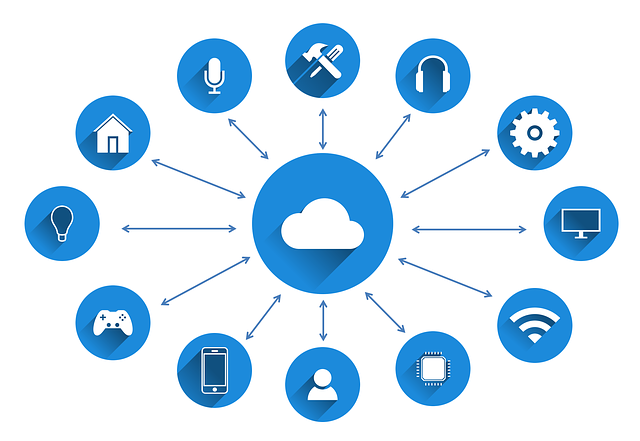
Cloud computing facilitate the access of applications and data from any location worldwide and from any device with an internet connection. Cloud computing offers businesses with scalable computing resources hence saving them on the cost of acquiring and maintaining them.
Remember the traditional days where we had to carry floppies, USBs and hard disk drives to access stored files? Cloud computing has revolutionized the way enterprises manage, scale and process large-scale applications and derive value from data. A cloud environment support IT infrastructure and reliable internet connection pool to enable users to use multiple apps, helping them solve workload challenges quickly and efficiently from anywhere through any device, significantly reducing computing costs. The elasticity of cloud technology, on-demand availability, high efficiency and IT capabilities are, additionally, driving companies of all sizes to adopt cloud services.
The International Data Corporation (IDC) forecasts that the worldwide public cloud services and infrastructure spending would reach $160 billion in 2018, up from 23.2% in 2017. It also estimates the spending to reach $277 billion in 2021 at a compound annual growth rate (CAGR) of 21.9%.
Let’s go through the advantages of cloud computing.
Types of cloud computing services
-
The most common and widely adopted cloud computing services are Infrastructure as a Service (IaaS), Platform as a Service (PaaS), and Software as a Service (SaaS).
What is Infrastructure as a Service (IaaS):
- IaaS is a cloud computing model where virtualized infrastructure is offered to, and managed for, businesses by external cloud providers. With IaaS, companies can outsource for storages, servers, data center space and cloud networking components connected through the internet, offering similar functionality as that of an on-premises infrastructure. Some examples of the wide usage of IaaS are automated, policy-driven operations such as backup, recovery, monitoring, clustering, internal networking, website hosting, etc.
What is Platform as a Service (PaaS):
- PaaS builds on IaaS. Here, cloud vendors deliver computing resources, both cloud software and hardware infrastructure components like middleware and operating systems, required to develop and test applications. The PaaS environment enables cloud users (accessing them via a webpage) to install and host data sets, development tools and business analytics applications, apart from building and maintaining necessary hardware. Some key players offering PaaS are Bluemix, CloudBees, Salesforce.com, Google App Engine, Heroku, AWS, Microsoft Azure, OpenShift, Oracle Cloud, SAP and OpenShift.
What is Software as a Service (SaaS):
- SaaS is special in that it incorporates both IaaS and Paas. Here, the cloud service provider delivers the entire software suite as a pay-per-use model. SaaS lets users easily access software applications — such as emails — over the internet. Most common examples of SaaS are Microsoft Office 360, AppDynamics, Adobe Creative Cloud, Google G Suite, Zoho, Salesforce, Marketo, Oracle CRM, Pardot Marketing Automation, and SAP Business ByDesign.
Types of cloud deployments
Public cloud:
- Public cloud, in general, is SaaS services offered to users over the internet. It is the most economical option for users in which the service provider bears the expenses of bandwidth and infrastructure. It has limited configurations, and the cost is determined by usage capacity. That said, the limitations of the public cloud are its lack of SLA specifications. Despite high reliability, lower costs, zero maintenance and on-demand scalability, the public cloud is not suitable for organizations operating with sensitive information as they have to comply with stringent security regulations.
Private cloud:
- As the name suggests, the private cloud is used by large organizations to build and manage their own data centers for specific business and IT needs/ operations. The private cloud provides more control over customizability, scalability and flexibility, while improving security of assets and business operations. This sort of infrastructure can be built on premises or outsourced to a third party service provider – either way, it has the ability to maintain the hardware and software environment over a private network solely for the owner. Large- and medium-scale financial enterprises and government agencies typically opt for private clouds.
Hybrid cloud:
- Hybrid cloud is the combination of a private and public cloud, providing for more flexibility to businesses while having control over critical operations and assets, coupled with improved flexibility and cost efficiency. The hybrid cloud architecture enables companies to take advantage of the public cloud as and when necessary due to their easy workload migration. For instance, businesses can use the public cloud for running high-volume applications like emails, and utilize private clouds for sensitive assets like financials, data recovery, and during scheduled maintenance and rise in demand.
Benefits of cloud computing
- Instant scalability:
- Cloud computing enables immediate scalability of infrastructure capacity depending on the business need. It is like having an unlimited IT resource, which can be scaled up and/ or down to meet user demands
- A lot of factors have enabled globalization, and a key one is technology and high-speed internet connectivity. Cloud empowers enterprises to deploy their applications across the globe so they can service their customers at a fraction of the cost of a traditional brick-and-motor businesses. Due to lower latency, customers around the world get an identical digital experience while using the applications
- Today, to cope with competition, businesses must have the ability to instantly scale their cloud capacity by accessing bandwidth demands from remote servers of a particular cloud service provider. If the business demand is more, the enterprise can turn up its computing capacity and IT resources availability with the click of a button. Such an ability improves organizational agility, productivity and efficiency making scope to experiment with new ideas and thereby, offering competitive advantage and the ability for the organization of any size to disrupt the market
- With the cloud, enterprises can focus on building their business rather than investing in hardware infrastructure and data centers that either remain idle, or underutilized. Cloud costs, however, depend on the consumption — a variable expense
- When enterprises deal with several different kinds of software, operating systems, and applications from various vendors for their everyday operations, they have to have software and security updates rolled out from time to time. This is a very time-consuming process and the downtime for system maintenance means loss of productivity. A cloud service provider or a managed service provider can take care of these automatically, saving time and manual effort on maintenance.
- The world is going digital, making robust backup and disaster recovery crucial for business of all sizes. However, on-premises investments for disaster recovery are things of the past today. Especially since cloud computing helps both large corporations and small enterprises save time and effort involved in this exercise
- Protecting sensitive, personally identifiable and/ or financial information is a considerable challenge for CIOs. Advanced cloud security features, however, have reduced the risks of information loss and cyber stealth
- Last, but not the least, cloud infrastructure significantly reduces power, IT infrastructure, and resource consumption by offering resources as per demand, thereby reducing e-waste and adverse impact on the environmental
- From closed cabins to bringing your internet-enabled devices to work, irrespective of the device type and/ or global location, cloud offers vast flexibility and empowerment to businesses as well as to their employees
- Company information no longer exists in silos (except confidential ones, of course). Centralized documentation control on cloud-based, file-sharing and social communication apps (like Slack, Yammer, etc) offers transparency and visibility into work processes, streamlining information flow and enabling better collaboration between teams, departments and employees seated in different time zones — all of which leads to improved productivity and bottom line.
INDUSTRIES USING CLOUD
The top companies using CLOUD are:
- Netflix
- Amazon
- Adobe
- EBay
- Alibaba
- IBM
These top level companies demand professionals having expertise in cloud and reward them with superb packages and good career growth. Hence, students should join PHS for cloud training to fulfill their career
